1. Grocery Prices are Declining
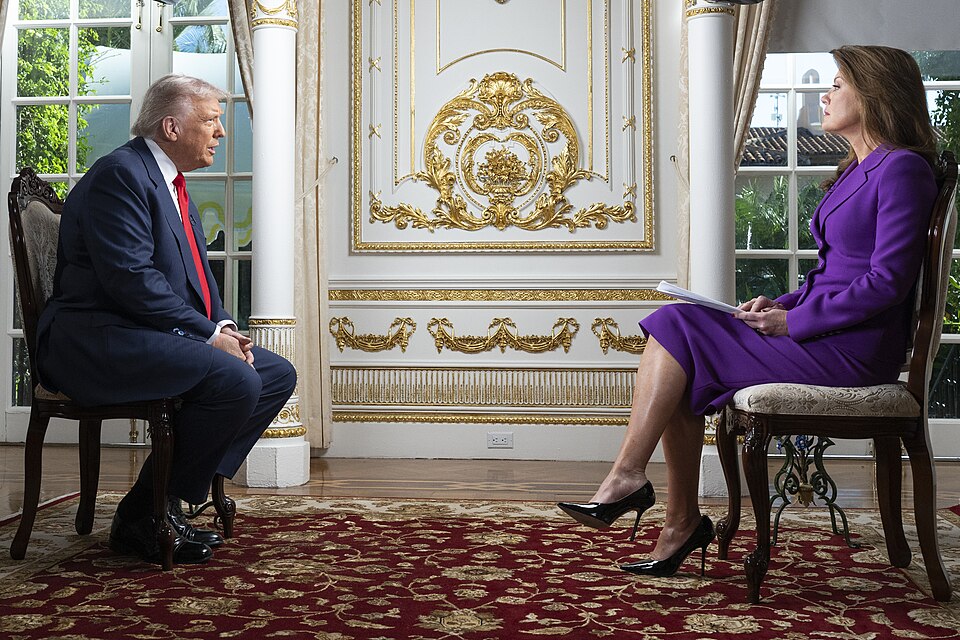
Trump’s assertion that grocery prices have been decreasing is contradicted by current economic data and consumer reports. While he claimed that grocery prices were “going down” under his administration, the reality paints a different picture. According to the most recent Consumer Price Index (CPI) data, grocery prices have been steadily increasing. For example, from August to September 2025, prices for food items such as fruits, vegetables, and cereals saw an increase of approximately 0.3%. Furthermore, comparing prices over the past year shows a rise of about 2.7% since September 2024. Even though some categories, like beef, have seen sharp price increases, most grocery items have followed suit with similar hikes. This puts a strain on American consumers, who are facing higher food costs despite the claims of a downturn.These inflationary pressures continue to impact household budgets, making it harder for families to maintain their standard of living. The notion that grocery prices are “down” under President Trump fails to capture the broader trend of rising food costs, leaving many to question the accuracy of such statements and the real impact on the average American’s wallet.
2. Claim of No Inflation
During his interview, Trump claimed that there was “no inflation” under his administration, a statement that is demonstrably false. While inflation rates have fluctuated over the years, it’s clear from the available data that inflation is still present. As of September 2025, the annual inflation rate stood at 3%, showing a slight increase from 2.9% in August. While this is an improvement from the highs of 2022, it is far from the zero inflation rate that Trump described. Inflation continues to affect the cost of goods and services across the board, from food and gas to housing and healthcare.Trump’s claim that inflation is non-existent or even as low as 2% is misleading at best and harmful at worst, as it downplays the real economic pressures that continue to affect American families. Rising prices for everyday necessities are still a significant issue, and dismissing inflation as a non-issue only serves to disconnect policy from the lived reality of most Americans. Instead of pretending that inflation is a thing of the past, a more honest conversation about the ongoing challenges would help Americans better understand the economic landscape.
3. $17 Trillion in U.S. Investments
Trump’s claim that $17 trillion is being invested in the United States right now is an exaggeration without basis in reality. He stated that “more than $17 trillion” was being invested, but this number is far from accurate. According to the White House, the total investment in the U.S. during his administration amounted to $8.9 trillion, which is already a highly inflated figure. Further investigation into the numbers shows that much of this “investment” includes promises and pledges from foreign governments and companies, rather than actual capital flows into the U.S. economy. For instance, some of these investments are vague commitments related to bilateral trade or non-specific economic exchanges, rather than concrete financial commitments that can be directly measured. These inflated figures mislead the public into believing that the U.S. is experiencing an unprecedented wave of economic growth when, in fact, the reality is more complicated. It’s important to critically assess such claims, as they can create false impressions of economic prosperity when, in reality, investment growth has been more modest and less impactful than what Trump suggests.
4. 25,000 Americans Killed by Drug Boats
Trump’s claim that each intercepted drug boat in the Caribbean kills 25,000 Americans is not only unsubstantiated but also deeply misleading. The president made this assertion during his interview, suggesting that every boat the U.S. military strikes prevents the deaths of thousands of Americans due to drug trafficking. However, experts quickly debunked this claim. First, the Caribbean is not a significant route for fentanyl smuggling, the drug responsible for the most overdose deaths in the U.S. Furthermore, the total number of U.S. overdose deaths from all substances in 2024 was approximately 82,000. By Trump’s logic, taking down just 16 boats would prevent more overdose deaths than the entire U.S. experiences in four years. This assertion not only fails to account for the complexity of the drug crisis but also wildly inflates the impact of military interventions. Drug trafficking is a complex, multi-national issue that involves many different routes and methods of distribution, and reducing it to the destruction of a few boats grossly oversimplifies the issue. Public health experts have criticized this claim as “absurd,” and it’s clear that Trump’s characterization of the situation doesn’t align with the reality of drug trafficking in the U.S.
5. Ending Eight Wars
Trump has repeatedly claimed that he ended eight wars during his presidency, a statement that stretches the truth to the breaking point. His list of “wars” includes several conflicts that were either not wars at all or were ongoing despite his supposed interventions. For example, the “war” between Egypt and Ethiopia over the construction of the Grand Ethiopian Renaissance Dam was not an active war but a diplomatic dispute. Similarly, Trump listed the conflicts in Kosovo and Serbia, as well as the Congo and Rwanda, as wars that he ended, despite the fact that these were not wars during his presidency. In many cases, the disputes Trump mentioned were more accurately described as long-standing tensions or peace processes rather than full-scale wars. The inclusion of such conflicts in his tally of “ended wars” is a clear exaggeration that paints an inaccurate picture of his foreign policy record. While Trump did broker some peace agreements, such as the Abraham Accords in the Middle East, the number of “wars” he claimed to end is significantly inflated, and his characterization of these events is misleading to the public.
6. Kamala Harris Interview Was Edited and Airing Close to Election
Trump’s claim that CBS aired an edited interview with Kamala Harris “two days” before the 2024 election is not only factually incorrect but also an attempt to discredit the media and manipulate the timing of the interview. In reality, the interview took place on October 7, 2024, a full four weeks before Election Day. The timing of the interview and its alleged editing have been blown out of proportion by Trump. The claim that CBS aired the interview close to the election in an attempt to sway voters is a misrepresentation of the facts. CBS, in its coverage, did not time the interview to directly coincide with the election, as Trump suggests. The interview’s timing was well within the typical media cycle, and the suggestion that it was strategically aired to influence the election is without merit. By distorting the facts of the interview’s release, Trump attempts to create a narrative of media bias that aligns with his broader claims of election interference and unfair coverage. However, the timeline of events tells a different story.
7. Biden’s $350 Billion Aid to Ukraine
Trump claimed that Biden allocated a staggering $350 billion in aid to Ukraine, a number that is wildly exaggerated. In reality, the U.S. government has allocated far less, with estimates ranging from $135 billion to $94 billion by mid-2025, depending on how the funds are counted. This includes both military and economic aid, as well as funds spent within the U.S. and other European countries, not just Ukraine. The $350 billion figure Trump cited is far from accurate and misrepresents the true scale of U.S. involvement in the Ukraine conflict. The U.S. has been a significant supporter of Ukraine’s defense efforts, but Trump’s inflated number seems designed to exaggerate the financial commitment and mislead the public about the U.S.’s role. The actual sum is much lower, and the funds have been carefully allocated to assist Ukraine in its struggle against Russian aggression. Misleading claims like these contribute to confusion and skepticism about the true cost of U.S. foreign policy and its support for Ukraine.
8. Foreign Countries Emptying Prisons to Send Migrants
Trump’s repeated claim that foreign countries, particularly Venezuela, are deliberately emptying their prisons to send criminals to the U.S. is not backed by evidence. This accusation has been a recurring theme in his speeches, but there is no verified data to support the idea that nations are purposely releasing prisoners and sending them across borders. Experts on international prison policy and crime have pointed out that there is no indication that countries like Venezuela are intentionally sending inmates to the U.S. as part of a migration strategy. While migrants from various countries do attempt to enter the U.S., the notion that these migrants are mostly former prisoners or people with criminal backgrounds is an oversimplification. In fact, most migrants seeking asylum in the U.S. are fleeing violence, economic hardship, and political instability in their home countries. The claim that foreign leaders are “emptying their jails” to offload criminals onto the U.S. is a mischaracterization of migration patterns. It serves more as a scare tactic than a factual representation of immigration processes, which are far more complex and nuanced than Trump suggests.
9. 25 Million Migrants Under Biden
Trump’s claim that 25 million migrants have been allowed into the U.S. under President Biden’s administration is vastly exaggerated. While it is true that there has been an increase in migration, the 25 million figure is far from accurate. As of December 2024, the total number of encounters with migrants during Biden’s presidency was under 11 million. This figure includes individuals who were quickly expelled under Title 42 policies, and even accounting for the “gotaways” — migrants who evaded detection — the number still falls well short of Trump’s claim. Furthermore, the term “migrants” encompasses a wide range of individuals, including asylum seekers, refugees, and individuals with valid visas, not just those entering the country illegally. The 25 million figure is not supported by government data, and the real number of people entering the U.S. is far lower. This kind of misinformation contributes to public misunderstanding and fear about immigration, as it distorts the reality of who is coming into the country and why.
10. The 2020 Election Was Rigged and Stolen
Trump’s claim that the 2020 election was “rigged and stolen” has been repeatedly debunked. Despite numerous court cases, audits, and investigations, there has been no evidence of widespread voter fraud that would have altered the outcome of the election. The U.S. Department of Justice, as well as election officials in every state, have affirmed that the 2020 election was fair and secure. The notion that the election was “rigged” is part of a broader narrative that Trump has continued to push, despite the lack of credible evidence. He has also claimed that the truth about the election fraud is coming out “in spades,” but no such evidence has materialized. The 2020 election was one of the most scrutinized elections in American history, and the results were certified by Congress. Trump’s insistence on this false claim undermines trust in democratic institutions and has led to divisive rhetoric and actions among his supporters. The fact remains that Joe Biden won the election with a clear margin, and no legitimate evidence has emerged to suggest otherwise.
11. Trump Ended the War in Afghanistan
Trump has made the claim that he ended the war in Afghanistan, but this oversimplifies the reality of the situation. While his administration did sign an agreement with the Taliban in 2020 to withdraw U.S. troops, the war did not officially end under his watch. The agreement laid the groundwork for a U.S. withdrawal, but it was only under President Biden that the actual pullout took place in August 2021. The chaotic evacuation and the Taliban’s rapid takeover of Afghanistan highlighted the challenges of ending the 20-year conflict. While Trump did negotiate with the Taliban, it is inaccurate to say that he ended the war, as his agreement did not bring about lasting peace or stability. The withdrawal itself was fraught with difficulties, and the resurgence of the Taliban shortly afterward demonstrated that the war’s underlying issues were far from resolved. Trump’s characterization of the end of the war ignores the complex realities of the conflict and the consequences of the U.S. withdrawal, which were felt most acutely under his successor.
12. Previous Presidents Used the Insurrection Act 28 Times
Trump’s assertion that recent U.S. presidents have invoked the Insurrection Act “28 times” is a clear misstatement of historical fact. In reality, no president has invoked the Insurrection Act anywhere near that many times. The most frequent user of the Insurrection Act was President Ulysses S. Grant, who invoked it six times in the post-Civil War era to suppress uprisings and maintain order in Southern states. Trump’s claim that the act has been used 28 times is grossly exaggerated and misrepresents the law’s application. The Insurrection Act is a powerful tool that gives the president the authority to send military forces to quell domestic disturbances, but its use has been rare throughout American history. Trump’s number of 28 is likely a misinterpretation or exaggeration, as the act has only been invoked a handful of times since its creation. Moreover, the legal and historical context of the Insurrection Act is complex, and its use is typically reserved for exceptional circumstances, not routine presidential actions.
13. Trump Was Allowed to Keep Presidential Records Under the Presidential Records Act
Trump has repeatedly claimed that he was legally entitled to keep presidential records at his Mar-a-Lago residence after leaving office, citing the Presidential Records Act. This assertion is misleading and inaccurate. The Presidential Records Act clearly states that all presidential records, whether classified or unclassified, belong to the U.S. government once a president leaves office. The law mandates that these records be transferred to the National Archives for safekeeping. Trump’s claim that he had the right to possess these documents was contradicted by legal experts, including former officials of the National Archives. The fact that he retained numerous classified and official documents at his personal property — despite the law requiring their proper storage and handling — led to an FBI investigation. Trump’s justification for keeping these materials is an attempt to misinterpret the law, which is designed to preserve presidential records for public access and historical record, not for private use. The legal dispute over these records underscores the importance of adherence to the law, and Trump’s claims about the Presidential Records Act have been widely debunked by experts and authorities.
14. Trump Ended the War in Iraq
Another claim Trump made was that he ended the war in Iraq. While he has often boasted about reducing U.S. involvement in Iraq, the claim that he “ended” the war is misleading. The U.S. military officially withdrew from Iraq in 2011 under President Obama’s administration. However, the situation in Iraq remained unstable, and the rise of ISIS led to the re-deployment of U.S. troops in 2014. Trump’s administration did oversee the defeat of ISIS in Iraq and Syria, but this was not the same as ending the war. The ongoing instability in the region, including tensions with Iran and continued military presence in the Middle East, contradicts the idea that the war was truly “ended” during Trump’s tenure. While the U.S. did reduce its footprint in Iraq during Trump’s presidency, the larger conflict in the region remained unresolved. Trump’s oversimplified rhetoric about the end of wars fails to acknowledge the complex geopolitical dynamics at play and the reality of continued military operations in the Middle East.
15. Trump and the Justice Department
Trump’s statements regarding his relationship with the Justice Department are often controversial. In his interview, he denied any influence over the department or its decisions, particularly concerning the prosecution of figures he had publicly criticized, such as former FBI Director James Comey and New York Attorney General Letitia James. However, evidence suggests that Trump did put public pressure on the Justice Department to pursue investigations against individuals he viewed as adversaries. For instance, in public statements, Trump repeatedly called for the prosecution of Comey, former National Security Adviser John Bolton, and others. There were also reports of Trump’s communications with Attorney General Bill Barr during his presidency, where he sought investigations into his political opponents. These actions raise concerns about the independence of the Justice Department and whether it was being used as a political tool. Trump’s claims of non-involvement with the Justice Department contradict the documented instances where he publicly pushed for legal action against his critics. This kind of political interference undermines trust in the justice system and raises serious ethical questions.




Leave a Comment